

Platforms, portals, apps or digital services can form part of the market offering themselves. When functionality, user experience and integration with existing systems are specific to the business model, custom development provides the flexibility needed to shape the solution accordingly.
Custom Software Development
Custom software for business processes, digital services and products
jambit develops custom applications and software systems for business-critical processes, digital services and product features. Our services range from requirements analysis, architecture and engineering to production rollout, operations, maintenance and continuous development.


Where customisation creates business value
Custom software development becomes relevant where the specific design of a solution contributes directly to value creation – for example through specialised business logic, a differentiated digital offering or features that enhance the product itself.
The goal is not to develop as much custom software as possible, but to apply custom development selectively where it makes a meaningful difference to processes, market offerings or the product experience.
How much custom development makes sense?
The right solution often combines existing systems, targeted enhancements, integration and custom development. The key is to identify which capabilities are already available and where a custom solution genuinely creates additional value.
Buy – Use standard solutions where standard is sufficient
Where functions are largely standardised and available solutions meet the requirements in a cost-effective manner, there is no need to develop them individually. Standard software and SaaS can speed up the process and reduce development costs.
Extend – specifically expanding existing solutions
If a solution already covers the majority of requirements, a targeted extension may make more sense than developing a completely new solution from scratch. Customised functions then supplement precisely those areas that are specific to the business.
Integrate – make existing capabilities accessible
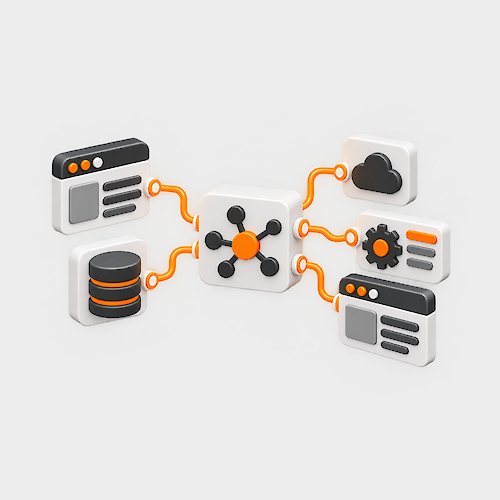
If the required functionality is already available in other applications, platforms or services, the greater value often lies in connecting them. Data and functionality can be made accessible across system boundaries without unnecessarily rebuilding existing capabilities.
When the interaction between multiple systems becomes the primary focus, Application Integration & API Engineering becomes the core task.
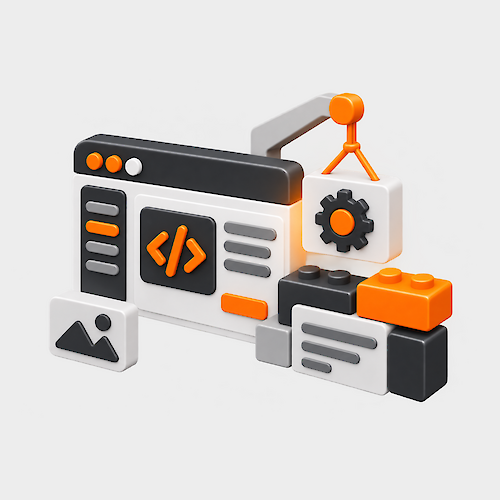
Build – develop custom solutions where individual design is key
Custom development is particularly valuable when specific business logic is required, a digital capability is missing, or software itself forms part of a service, business model or product experience.
If the required capability already exists in principle but its further development is constrained by the existing application, Application & Legacy Modernisation is a more appropriate starting point.
From specific requirements to a production-ready software system
Custom software development starts by identifying which digital capability is actually needed. jambit combines business and user requirements with architecture and engineering to develop the right technical solution.
Engineering expertise for custom software
The technical and design expertise required for a project depends on the digital target vision and the system architecture. Multiple disciplines often work together.
Mobile App Development
When custom software is implemented as a mobile application, jambit combines app development with backend systems, integration and the existing system landscape.
Explore Mobile App Development
Frontend Development
When interaction and the digital user experience play a central role, the frontend becomes a key part of the software solution.
Backend Development
Business logic, data processing and technical services are implemented in the backend to ensure they can be used reliably by applications and other systems.
User-Centred Design & UI/UX
When user requirements play a significant role in shaping an application, User-Centred Design helps incorporate them into the concept and development process from an early stage.
What custom software can achieve
When used effectively, custom software provides flexibility where specific requirements are critical to business processes, market offerings or the product experience.
Enable differentiation
When software itself forms part of a digital offering, service or product experience, custom development can create features and user experiences that clearly differentiate the offering in the market.
Support business processes with tailored solutions
Business-critical processes often follow specific business logic that existing solutions can only partially address. Custom software can support these requirements and provide functionality precisely where it is needed.
Close digital gaps
Not every missing capability requires existing applications to be replaced. Custom software can selectively complement existing systems and add missing functionality across processes and value chains.
When custom software development makes sense
Custom development is particularly relevant when specific requirements cannot be adequately addressed by existing solutions or when software itself makes a significant contribution to the company’s value creation.
A new digital product or service is to be developed
Existing solutions do not fully meet business-critical requirements
Existing applications or standard solutions may cover most of the required functionality while still leaving gaps in critical areas. Custom development addresses these specific requirements without replacing systems that already work effectively.
A process remains incomplete despite existing systems
Disruptions between systems, manual handovers or workarounds often arise where existing applications do not fully support a process. A custom application can provide the missing digital capability and close the gap in the process.
Software becomes part of the product or customer experience
Companion apps, in-car software and digital features for connected products extend physical products with new services and ways of interacting with them. When software directly shapes the product experience, its custom design becomes a differentiating factor in its own right.
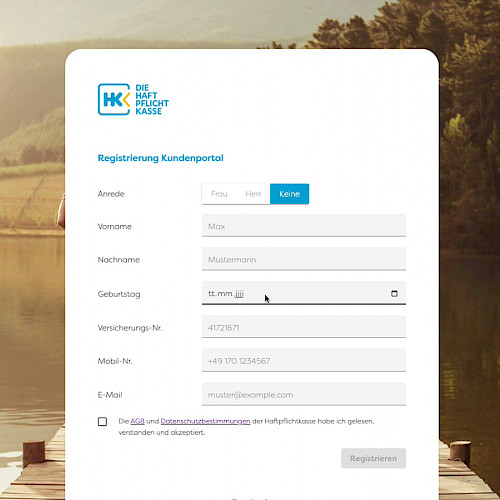


Assess your custom software project together
You do not need to have decided on custom software in advance. jambit works with you to determine where existing solutions are sufficient and where custom development creates business value – and takes responsibility from implementation through operations and maintenance to continuous development.
* Mandatory field
