



When information has to be transferred manually, entered multiple times or moved between systems using workarounds, end-to-end integration is often missing.
Application Integration & API Engineering
Reliably connect applications, platforms and services
jambit designs integration architectures, APIs and interfaces that enable existing and new systems to work together reliably. Our services range from analysing the system landscape and defining the architecture to technical implementation, operations, maintenance and continuous development.


Integration is an architectural challenge – not just a question of interfaces
Digital landscapes consist of custom applications, standard software, SaaS solutions, platforms, data sources and external services. These systems do not need to be standardised in order to work together reliably.
What matters is which systems need to interact, where responsibilities lie and what level of coupling is appropriate. Good integration therefore creates clear system boundaries and controlled access to data and functionality rather than simply establishing technical connections.
This makes integration an architectural decision – not a technical afterthought at the end of a project.
Connect systems, make functionality accessible or reduce dependencies?
Not every integration challenge requires the same approach. What matters is how systems need to work together, which capabilities need to be shared and where independence needs to be maintained.
Connect systems selectively
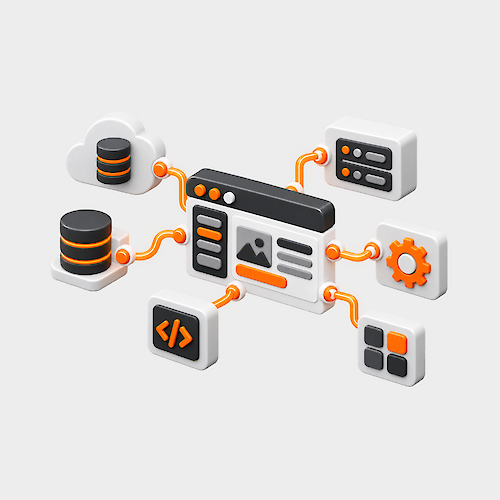
When applications need to exchange data or functionality reliably, direct integration can be the right approach. Clear responsibilities and well-defined interfaces ensure that the connection remains transparent and that changes do not unnecessarily affect other systems.
Make functionality and data accessible through APIs
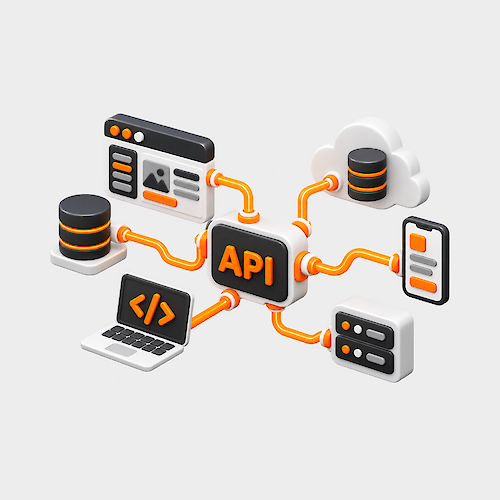
Existing capabilities do not need to be redeveloped for every new product or service. Clearly defined APIs make it possible to provide and reuse data and functionality in a controlled way across other applications, platforms, partners or external services.
Reduce dependencies between systems
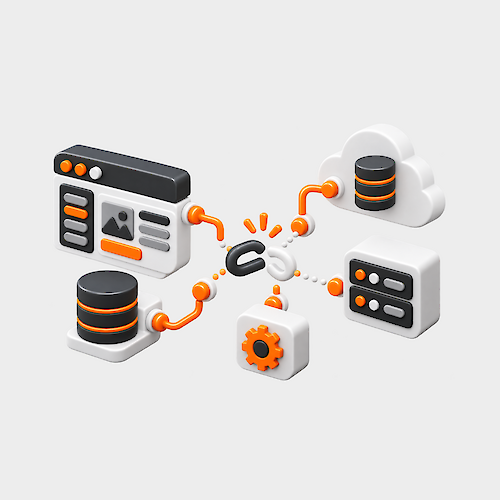
When independent applications are so tightly connected that changes can no longer be made independently, the coupling itself becomes a problem. Clear system boundaries and well-defined interfaces help make these dependencies easier to manage.
The right integration approach depends on business responsibilities, the required data and functionality, and how the system landscape is expected to evolve.
From the system landscape to production-ready integration
Integration starts with a clear understanding of which systems are involved, which capabilities they provide and how they currently interact. Based on this, jambit designs an integration architecture and implements the required connections.
Backend engineering as the technical foundation
Integration architectures are often implemented through backend services, APIs and interfaces. Backend development provides the necessary services and makes business logic and data available to other applications and systems.
Integration enables connectivity across system boundaries
The value of good integration lies not in the number of interfaces, but in making data and functionality accessible across systems and integrating new systems in a controlled manner.
Continue using existing systems and investments
New digital requirements do not automatically mean that functioning applications need to be replaced. Integration makes it possible to continue using existing systems while selectively extending them with new capabilities.
Connect new applications, services and external systems more easily
Clearly defined interfaces make it easier to integrate new digital offerings, platforms, SaaS solutions or external systems into an existing landscape.
Make data and functionality reusable
APIs and structured integrations make it possible to provide existing capabilities for different applications and use cases instead of rebuilding them for every new project.
Keep integration complexity manageable
Every additional application creates new potential dependencies. A clear integration architecture helps keep system boundaries, responsibilities and connections transparent and manageable.
How to identify integration needs
Integration becomes a task in its own right when the problem lies not within a single system, but in how the overall digital landscape works together.
Processes break down between applications
Multiple applications require the same data and functionality
When products, services or internal applications repeatedly need to access the same capabilities, providing them in a controlled and reusable way through interfaces and APIs becomes increasingly important.
Changes create additional work in other systems
When changes to one application regularly require changes to interfaces or downstream systems, excessive dependencies between the systems involved can make further development more difficult.
Every new integration becomes a separate project
When new applications, SaaS solutions, platforms or partners repeatedly need to be connected through individual custom solutions, a robust integration architecture is often missing.
If, however, the main requirement is to make technical changes to an existing application itself, the focus is more likely to be on Application & Legacy Modernisation. If a specific digital capability is missing and needs to be developed as a custom solution, Custom Software Development may be the more appropriate starting point.



Assess your integration needs together
The right integration architecture depends on system boundaries, responsibilities and the capabilities that need to be shared across multiple applications.
jambit works with you to assess your integration needs, designs the architecture and takes responsibility from implementation through operations and maintenance to continuous development.
* Mandatory field
