Automotive

Software, the cloud and AI for the mobility of tomorrow

From vehicle software to digital services: jambit develops, modernises and integrates bespoke software solutions for OEMs and suppliers. We combine automotive expertise with expertise in software, the cloud, data, AI and security – ensuring that new vehicle functions, digital platforms and connected services can be reliably put into production and further developed over the long term.

  • Continental
  • TomTom
  • VW
  • Visteon
  • Mercedes-Benz
  • Alpine
  • General Motors
  • Digades
  • Audi
  • Sixt
  • Renault
  • Magneti Marelli
  • Webasto
  • Fiat
  • MINI
  • CE4A
  • Car Connectivity Consortium
  • BMW
  • Continental
  • TomTom
  • VW
  • Visteon
  • Mercedes-Benz
  • Alpine
  • General Motors
  • Digades
  • Audi
  • Sixt
  • Renault
  • Magneti Marelli
  • Webasto
  • Fiat
  • MINI
  • CE4A
  • Car Connectivity Consortium
  • BMW

Automotive software development: Shaping digital mobility

Software is transforming value creation in the automotive industry. Vehicle functions, digital services, cloud platforms and data are becoming increasingly intertwined. With the transformation towards the software-defined vehicle (SDV), this trend is becoming even more significant. At the same time, OEMs and suppliers face the challenge of modernising established system landscapes, shortening development cycles and reliably integrating new software solutions into existing processes and platforms.

jambit supports companies in the automotive industry with custom software development—from strategy and architecture through development, integration, and cloud migration to production operations—as well as with existing legacy systems and their further development. We combine automotive experience with expertise in software, the cloud, data, AI and security to ensure that digital projects become sustainable solutions in the long term.

The automotive industry in transition: When software reshapes value creation

The automotive industry is undergoing a far-reaching technological transformation. Vehicles are increasingly becoming part of connected software and service ecosystems. Digital functions no longer arise exclusively within the vehicle, but through the interaction of vehicle software, back-end systems, cloud platforms, data and applications.

The software-defined vehicle is a key driver of this development. It is changing the requirements for software architectures, development processes and the continuous refinement of vehicle functions. At the same time, connected car services, digital platforms, data-driven applications, and AI are essential.

This presents different challenges for OEMs and suppliers. Car manufacturers must integrate digital vehicle functions, services and platforms across various systems. Suppliers must incorporate their software and components into complex development and integration environments and cope with changing requirements for collaboration and software development.

The shared challenge is that new digital possibilities must be compatible with established structures, existing systems and the demands of day-to-day business.

It is therefore not simply a matter of developing new software. What is crucial is how software can be integrated across system and organisational boundaries, operated productively and continuously developed.

The key challenges of the automotive transformation

Increasing software complexity across vehicles, the cloud and organisations

New digital functions emerge from the interaction of different systems, applications and teams. Vehicle software, cloud back-ends, platforms and digital services must be coordinated with one another.

With every additional dependency, the effort required for architecture, development, integration and further development increases. It is therefore becoming increasingly important for OEMs and suppliers to keep software complexity under control without restricting innovation.

Established platform and system landscapes make change difficult

Automotive software is rarely developed from scratch. Existing applications, platforms and different technical architectures must continue to function whilst new solutions are introduced.

A complete replacement is often neither necessary nor advisable. What is needed are modernisation approaches that take existing systems into account, reduce technical dependencies and integrate new functions step by step.

Integration across vehicle, cloud and organisational boundaries

Connected car applications and digital services link vehicle functions with back-end systems, data sources, apps and other platforms.

This integration is not merely a technical task. Different systems, responsibilities and development teams must work together. Reliable integration is crucial, particularly in the collaboration between OEMs, suppliers and other technology partners, to ensure that digital functions work as a complete solution.

Development and release speed under pressure

The pressure to innovate is mounting, whilst development, integration and testing workloads remain high. Complex dependencies and limited software development capacity can make it even more difficult to deliver new features.

Companies therefore need development processes and platforms that take the strain off teams, support collaboration and enable faster releases, without compromising on quality and maintainability.

International competitive and cost pressures increase the need for action

The German automotive industry is facing intense international competitive and cost pressures. Growing demands for connectivity, over-the-air updates and digital functions require OEMs and suppliers to develop software more quickly and efficiently – without compromising on quality and safety.

jambit provides support through reliable project planning, AI-assisted software development and flexible collaboration models. This also includes our own TISAX-certified nearshore site in Armenia, which provides additional development capacity.

Integrating data, AI and security effectively into existing environments

Vehicle, development and corporate data offer potential for digital services, analytics and AI applications. However, their value depends on whether they are available, can be integrated and are usable for specific applications.

At the same time, new solutions must be developed and operated securely. Sensitive information, differing system boundaries, and data protection and compliance requirements increase the complexity.

Consequently, the productive use of data and AI, as well as security, becomes an end-to-end task in automotive software development.

Find out more about our automotive projects

CARIAD

Provision of the Service Platform Retail for the VW Group.

Collaboration Tool Suite

Platform modernisation for an automotive manufacturer.

Mercedes-Benz

Back-end development for a digital comfort control system.

Von der digitalen Herausforderung zur produktiven Automotive-Software

From digital challenges to productive automotive software 

Whether it’s SDV transformation, the modernisation of existing platforms or the development of new digital services: technological innovation only creates sustainable added value when it can be integrated into existing environments, operated securely and further developed over the long term. 


To this end, jambit combines consultancy with implementation. We support you every step of the way – from strategic positioning and architecture, through bespoke software development and integration, to productive operation, scaling and further development. 


In doing so, we take into account not only new requirements, but also existing systems, technical dependencies and collaboration with your subject matter and development teams. 


This is how jambit takes responsibility for your automotive software

Complex automotive projects require more than just the development of individual applications. It is crucial that strategy, architecture, implementation and operation are seamlessly integrated. jambit supports OEMs and suppliers throughout the entire software lifecycle and, depending on the project, either takes sole responsibility or works closely with your specialist and development teams.

Translating strategy and architecture into actionable solutions

We work with you to develop viable technical roadmaps and architectures that take into account your requirements as well as existing systems and dependencies. In doing so, we combine consultancy with practical implementation to ensure that strategic initiatives result in productive software.

Developing bespoke software and modernising existing systems

jambit develops new applications, modernises legacy software landscapes and integrates new components into existing platforms. In doing so, we focus on incremental development rather than a blanket replacement of existing systems.

Project example: When modernising the Collaboration Tool Suite for a car manufacturer, jambit migrated an existing platform to a cloud-native architecture. Automated deployments and DevSecOps mechanisms support further development and operations.

Managing integration across system and platform boundaries

We develop backend, cloud and integration solutions and ensure that different applications, data sources and platforms work together seamlessly. In doing so, we take a holistic view of architecture, interfaces and operational requirements.

Project example: jambit developed the backend for a digital comfort control system for Daimler and supported the project from the initial vision through prototyping to live implementation.

Long-term support for development and operation

Our responsibility does not end with the first release. jambit develops and operates software platforms, supports their scaling, and handles maintenance and further development. This enables new requirements to be implemented on an existing technical foundation.

Project example: For CARIAD’s Service Platform Retail, jambit provides long-term support for a developer platform, from development through to operation.

Reducing the workload on development teams with AI and automation

Through AI Applied Engineering, jambit supports the use of AI throughout the software development life cycle – from development and modernisation through to testing and quality assurance. The aim is to reduce development effort and make more targeted use of existing capacity.

Ensuring security and compliance throughout the entire process

jambit advises on relevant security and compliance requirements and takes these into account during architecture, development, integration and operation. This ensures that information security and data protection are integrated into the software development process at an early stage.

Our TISAX certifications also lay the foundation for setting up test environments using customers’ hardware, both at jambit’s offices and at our nearshore location in Armenia. This enables hardware-related development and testing tasks to be carried out even in cross-location project models.

Digital targets along the automotive value chain

The transformation of the automotive industry is opening up new opportunities for vehicle functions, digital services and software platforms. Which solutions are relevant depends on your role in the value chain and your existing system landscape.

In-Car Software Platforms: Digital Functions in the Vehicle

Digital driving experiences require software platforms that bring together various applications and services within the vehicle. Android Automotive OS (AAOS) and infotainment are specific examples of this area of activity.

The aim is to create in-car applications that integrate seamlessly into the existing vehicle and software architecture and can be continuously developed.

Software-defined Vehicle: Continuously developing vehicle functions

The software-defined vehicle is transforming the role of software within the vehicle. Functions, platforms and digital services must interact more closely and be capable of being developed further throughout the vehicle’s lifecycle.

The focus is on software architectures and integration solutions that connect new functions with existing vehicle and backend systems.

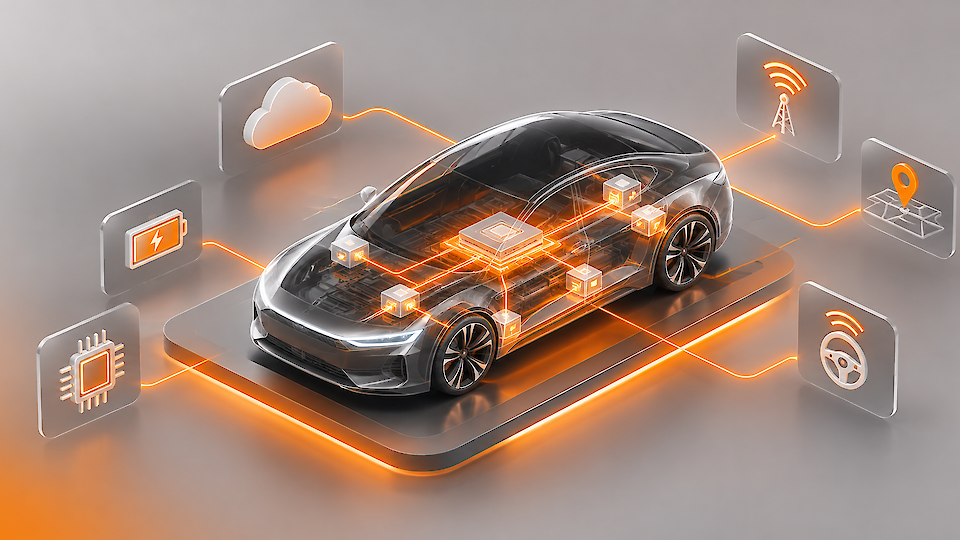
Vehicle-Cloud Integration & Connected Services

Connected vehicle functions require reliable data exchange between the vehicle, the back-end, the cloud and other data sources.

Potential applications range from personalised comfort functions to digital services that consolidate information from different systems. Daimler’s back-end system for comfort control illustrates one such use case.

Digital Customer Experience & After-sales Services

Digital offerings are expanding the relationship between vehicle manufacturers, retail partners and customers. Apps, commerce platforms and digital after-sales services are creating new opportunities to provide vehicle functions and services.

A concrete example is the Audi Commerce Platform, through which digital vehicle products and functions that can be booked at a later date are offered.

Automotive Cloud & Developer Platforms

Cloud and developer platforms form the technical foundation for the development and deployment of digital applications.

The aim is to create platforms on which development teams can develop, deploy and further refine applications without having to rebuild the entire technical infrastructure from scratch for every project.

Data & AI: Making productive use of vehicle and business data

Data-driven applications can harness vehicle, development and business data for digital services, analytics and AI.

Specific projects range from the integration of different data sources to the incorporation of AI into production applications. It is crucial that data availability, integrability, security and operational capability are taken into account from the outset.

Across the board, the modernisation of existing software landscapes, as well as security and compliance, are prerequisites that must be taken into account in all these target scenarios.

Faster development. Less complexity. Software that is sustainable in the long term.

The business benefits of modern automotive software are not limited to new features. What matters most is how development, integration and operation are improved, and how digital solutions can be continuously developed over the long term.

Shorter development and release cycles

Less effort required for integration

More available development capacity

Improved scalability of existing systems

Data that can be put to productive use and digital services

Operations that are sustainable in the long term

Why automotive companies work with jambit

For more than 25 years, jambit has been supporting the automotive industry in the development of bespoke software solutions. We work alongside OEMs and suppliers to help them further develop existing software landscapes and productively integrate new vehicle functions, cloud platforms, data and digital services.

To achieve this, we combine consultancy and implementation, bespoke software development and expertise in cloud, data, AI and security. Our teams do not stop at the target vision or pilot project, but support projects from architecture and development through to integration, live operation and further development.

As a technology-agnostic partner, we develop software tailored to your requirements, systems and objectives – rather than adapting your processes to a predefined product. In doing so, we take existing IT landscapes into account and support their gradual modernisation.

Depending on your requirements, we can take on project leadership or work in mixed teams alongside your subject matter and development teams. In this way, we complement existing expertise and support the implementation of complex software projects.

What sets jambit apart:

Frequently Asked Questions about Automotive Software Development

How does jambit support OEMs and suppliers in software development?

jambit develops customized software solutions and provides support for architecture, integration, modernization, and operations. The specific services required for a given project depend on the existing system landscape and the relevant requirements. Collaboration can take place in independently managed projects or in conjunction with internal subject-matter and development teams.

How can existing automotive and legacy systems be modernized?

Modernization doesn't have to start with a complete overhaul. jambit works with you to develop a strategy for gradually enhancing existing software, integrating new components, and modernizing platforms. This allows you to align change with the demands of day-to-day operations.

How can vehicle software, the backend, and the cloud be reliably connected?

Key factors include a well-coordinated software architecture, appropriate interfaces, and early consideration of data, security, and operations. jambit develops backend, cloud, and integration solutions that enable different systems to work together and take existing automotive environments into account.

What role do in-car software platforms and Android Automotive OS play?

In-car software platforms form the foundation for digital functions and applications in vehicles. Android Automotive OS is one possible platform for infotainment and related apps. jambit provides support for the development and integration of customized software solutions in this environment.

How can we successfully transition from an AI pilot project to full-scale production?

The transition will be successful if, in addition to technological potential, data availability, integration, scalability, security, and operational capability are also taken into account. In the automotive sector, AI solutions must interoperate with existing software environments, data sources, and platforms. Clearly defined responsibilities for operation, monitoring, and further development support sustainable use.

How does jambit address security and compliance in automotive projects?

jambit views security and compliance as integral parts of architecture and software development. We provide consulting on relevant requirements and develop software in a way that ensures security, data protection, and compliance requirements are met. jambit holds certified ISO 27001 and TISAX certifications.

Let's tackle your automotive challenge together

Whether it’s SDV transformation, modernizing existing software landscapes, in-car platforms, vehicle-cloud integration, digital services, or data-driven applications:

Together, we’ll assess your current situation and develop a tailored path to a productive software solution.

Philip Achenbach jambit Head of Business Division Automotive

Philip Achenbach

Head of Division Mobility

Let's tackle your automotive challenge together

* Pflichtfeld

Cookie Settings

This website uses cookies to personalize content and ads, provide social media features, and analyze website traffic. In addition, information about your use of the website is shared with social media, advertising, and analytics partners. These partners may merge the information with other data that you have provided to them or that they have collected from you using the services.

For more information, please refer to our privacy policy. There you can also change your cookie settings later on.
contact icon

Discuss an
automotive project