


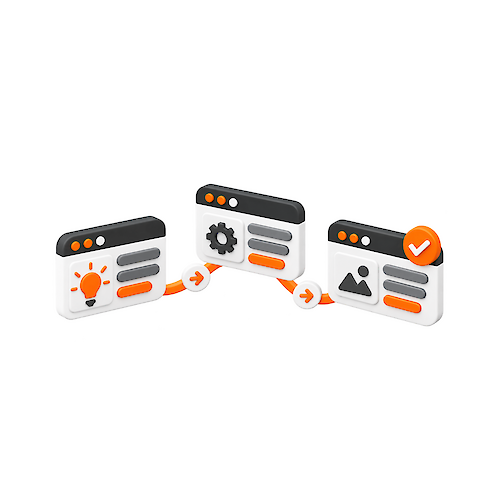
Features and process changes can still be implemented, but increasingly require more effort, coordination and technical workarounds.
Application & Legacy Modernization
Modernise business-critical applications without losing their core business value
jambit modernises existing applications where technical limitations make necessary changes increasingly difficult. Our services range from assessing existing systems and defining the target architecture to step-by-step modernisation and migration, production operations, maintenance and continuous development.


Modernisation does not automatically mean replacement
Business-critical applications often contain business logic, processes, data structures and integrations that have evolved over many years. These assets do not lose their value simply because the underlying technologies are ageing. The need for action arises primarily when an application increasingly slows down necessary changes, makes them more costly or introduces greater risk.
In some situations, complete replacement may be the right approach. However, it should not be the starting assumption for modernisation. The key is to identify which parts continue to deliver value and where technical limitations genuinely prevent change.
Evolve, modernise or replace?
Modernisation is not a one-size-fits-all approach. The key question is how extensively an existing system needs to be changed so that it can once again reliably meet current and future requirements.
Evolve
If an application remains fundamentally sound from both a business and technical perspective, targeted enhancements may be sufficient. New features or process changes can be implemented without fundamentally changing the existing system structure.
Modernise the technical foundation
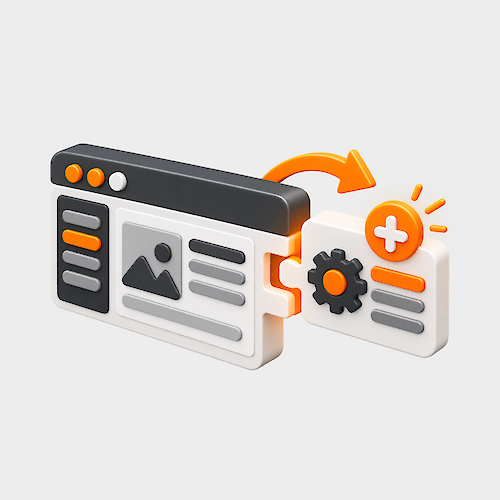
If the business logic continues to provide value while the technology or architecture increasingly holds the system back, the technical foundation can be selectively modernised without rebuilding the entire system.
Selectively decouple components
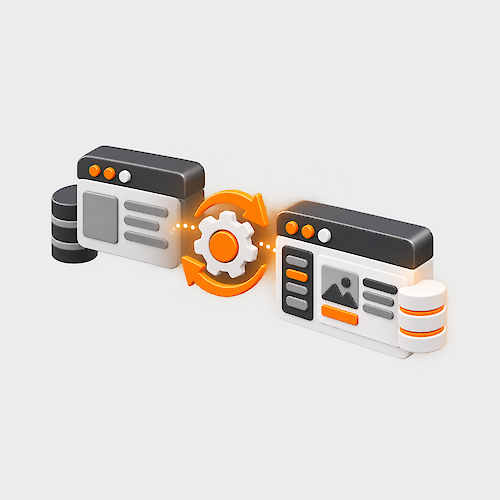
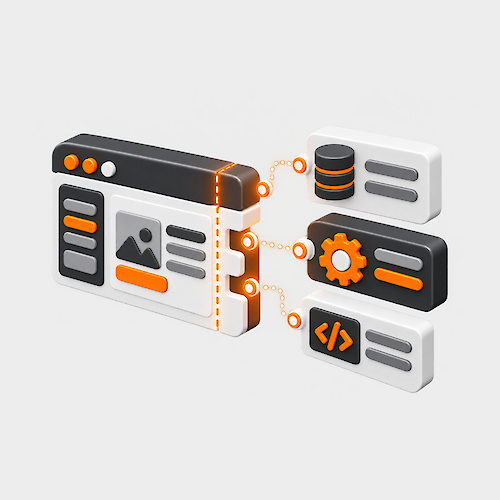
When dependencies between application components or adjacent systems make further development unnecessarily difficult, system boundaries can be redefined and individual components selectively decoupled. This makes the application easier to adapt and evolve.
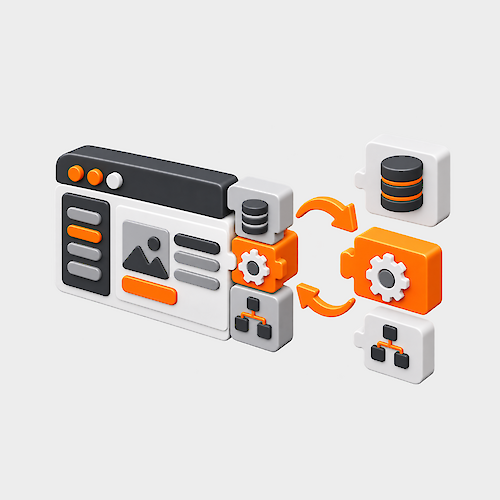
Replace individual components
If certain components are no longer viable from a business or technical perspective, they can be redeveloped, migrated or replaced with suitable solutions while other parts of the system remain in place.
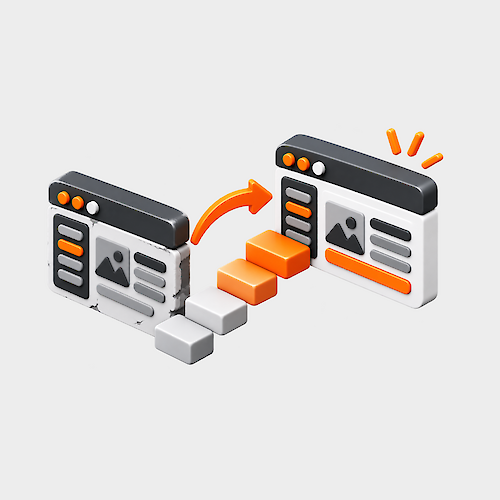
Rebuild the application step by step
If the architecture, technology or dependencies fundamentally limit further development, a step-by-step rebuild or complete replacement may be the more appropriate long-term approach.
The appropriate level of intervention depends on the business value of the existing system, its technical adaptability, existing dependencies, transition risks and the long-term target vision.
From the existing system to a modernisation roadmap
The starting point is to determine what should be retained and where change is necessary. jambit combines a business and technical assessment of the existing system with a realistic target vision and a controlled path towards it.
Engineering expertise for modernisation
Which technical layers need to change depends on the limitations of the existing application and the target vision. Depending on the starting point, the following areas of expertise may be particularly relevant.
Mobile App Development
Modernise existing mobile applications or gradually migrate them to a new technological foundation.
Explore Mobile App Development
Frontend Development
Evolve existing frontends and their technical foundation so that new requirements can be implemented more effectively.
Backend Development
Modernise backend components and services selectively, restructure them or gradually decouple them from existing architectures.
Preserve existing value and restore adaptability
Modernisation creates the greatest value when an existing application is not only technologically updated, but continues to reliably fulfil its business purpose while becoming easier to evolve and enhance.
Make further development more predictable
When technical limitations and dependencies become easier to manage, new features and process changes can be implemented, tested and brought into production more effectively.
Preserve valuable business logic
Existing applications often contain process knowledge and business-critical logic that have evolved over many years. Modernisation makes it possible to retain this value while removing technical limitations.
Control change and operational risks
Step-by-step modernisation, clearly defined transitions and targeted migrations help implement changes in a controlled manner and limit risks to production systems.
How to identify the need for modernisation
The need for modernisation is not determined by the age of a technology alone. It becomes particularly relevant when existing systems increasingly hinder the further development of the business.
New requirements take increasingly longer to implement
Releases and changes are becoming increasingly risky
When small changes cause significant side effects, testing becomes disproportionately complex or releases require increasing levels of caution, the underlying problem often goes deeper than individual features.
Critical knowledge is concentrated among a small number of people
In applications that have evolved over many years, the architecture, business logic and technical specifics may only be fully understood by a small number of people. This creates additional dependencies for ongoing development and operations.
New digital initiatives are held back by existing systems
This becomes particularly critical when new customer offerings, digital processes or product features make business sense but are blocked by the technical limitations of existing software or become disproportionately complex to implement.
Technology end-of-life, discontinued vendor support or limited maintainability can be additional triggers. However, the decisive factor is not the age of an application, but whether it increasingly limits future value creation.
If the application itself remains fundamentally viable and the main challenge lies in how it interacts with other systems, the focus is more likely to be on Application Integration & API Engineering. If, on the other hand, a specific digital capability is missing and needs to be created from scratch, Custom Software Development may be the more appropriate starting point.


Assess your modernisation project together
The required level of intervention depends on the value and limitations of the existing system. jambit works with you to assess the current situation, define the right modernisation roadmap and take responsibility from implementation and migration through operations and maintenance to continuous development.
* Mandatory field
