

















Content management systems (CMS), media management systems, and other applications were often implemented to address different needs. They fulfill important tasks in day-to-day operations, but they are not always easy to expand. A lack of interfaces and tight technical dependencies can slow down the introduction of new features, products, and distribution channels. Additional standalone solutions further increase complexity.
Media
Develop digital media offerings, engage audiences, and tap into revenue potential
Digital media offerings must reach people, remain relevant, and be economically viable. jambit combines consulting on audience activation and monetization with software engineering. We develop user-centric media products, leverage data and AI to create new features, and modernize existing platforms—from strategic planning through to production deployment.


Media in Transition: Producing Content Cost-Effectively, Further Developing Digital Offerings
Media companies face the challenge of producing their content cost-effectively and delivering it through various channels. At the same time, they must accelerate the development of digital products, attract and retain users, and support existing or new revenue models. While the approaches to achieving these goals vary across publishing, broadcasting, streaming, and audio, they are united by the same requirements for speed, quality, and cost-effectiveness.
“Audience first” means developing digital media offerings based on the audience’s needs—not solely on existing content or technical channels. Those who understand usage scenarios and create relevant offerings can improve the conditions for loyalty, repeat usage, and monetization.
Audience activation puts this perspective into practice through appropriate user engagement, content experiences, data, personalization, and targeted development of digital products. Which approaches make sense depends on the specific media segment and business model.
At the same time, day-to-day operations tie up resources. Editorial systems, content management platforms, production applications, and digital distribution channels have evolved over the years. New features must integrate with existing processes, while content continues to be published reliably and digital offerings remain accessible.
The central challenge, therefore, is to make content creation more efficient while expanding the scope for new digital media products—without turning every enhancement into a comprehensive system overhaul.


Where the Digital Transformation of Media Companies Is Stalling
1. Established content and media platforms are holding back new features
2. Cross-media content processes create unnecessary work
Content is planned, created, edited, enriched, and published through various channels. When systems aren’t sufficiently integrated, this leads to manual handoffs, duplicate work steps, and media breaks. This ties up resources in editorial, production, and IT, and makes it difficult to streamline publishing processes.
3. Separate content and usage data make user activation more difficult
Information about content, usage, and digital products is often stored in different systems and data structures. Without a reliable understanding of user needs and usage patterns, it is difficult to translate audience strategies into concrete product decisions. A lack of interfaces and inconsistent data complicate tasks such as segmentation, personalization, and the targeted engagement of existing users. Additional analyses alone do not resolve these fundamental problems.
4. Digital user offerings and revenue streams are reaching their limits
Websites, apps, streaming services, and other digital products must leverage content, access points, and features from existing systems. If, for example, personalized offerings, paywalls, or subscription features are to be added, this creates additional integration requirements. Rigid architectures can thus hinder the development of new products and business models or make their further development more expensive.
5. The potential of AI does not automatically find its way into everyday editorial work
AI can support the cataloging, classification, processing, and delivery of media content. However, functional prototypes alone are not sufficient for productive use. What is crucial is the availability of data, reproducible results, the ability to perform expert reviews, and integration into existing workflows. Only then can AI effectively reduce the workload associated with repetitive tasks.
6. Referendums slow down the development of new media offerings
New app features, personalized offers, or digital revenue models require collaboration among editorial, product management, marketing, design, and IT. When technical decisions aren’t consistently traceable or requirements get lost at the interfaces between teams, this leads to follow-up questions, rework, and delays. Even AI-powered development can speed up individual tasks, but it doesn’t automatically solve these coordination problems.

[stei tu:nd] – where the media industry discusses its future
Since 2020, jambit has been bringing together selected decision-makers from media companies at the [stei tu:nd] Media Conference.
The conference provides a space for open, confidential discussion on the issues currently shaping media companies: Audience First, new revenue models, AI, changing work processes, and the further development of digital offerings. This fosters a dialogue that bridges business and editorial perspectives as well as technology and product expertise.


Der [stei tu:nd] Newsletter: alle zwei Wochen Medienwissen und Impulse
Mit dem zweiwöchentlichen [stei tu:nd] Newsletter führen wir den fachlichen Austausch zwischen den Konferenzen fort.
Im Mittelpunkt stehen Perspektiven und Einordnungen zu Audience First, digitalen Medienprodukten, Monetarisierung, KI und Entwicklungen in der Medienwirtschaft – für alle, die sich regelmäßig mit der Zukunft ihrer Branche beschäftigen.
Publishing, broadcasting, streaming, and audio have different requirements
Digital content connects the various media segments. However, their production processes, distribution channels, and business models differ. That is why we always consider software within the context of the respective media.
Publishing: Integrating Editorial Workflows and Digital Products
Traditional and digital publishers must efficiently create, edit, and deliver content across various channels. At the same time, they continue to develop digital products, audience engagement features, and revenue models. To achieve this, established publishing systems must integrate with new applications and features.
Streaming & Entertainment: Continuously Improving User Experiences
Streaming and entertainment services bring together a variety of content, platforms, and devices. New features, digital access points, and user experiences must work seamlessly with existing content systems, backends, and data sources. Performance and peak loads also play a key role in ensuring these services operate effectively.
Broadcasting: Integrating Production and Distribution Systems
Broadcasting companies use specialized applications for planning, production, management, and distribution. New digital offerings intersect with established workflows and technical dependencies. It is crucial to make information and functions available across system boundaries without disrupting ongoing operations.
Audio & Podcasts: Linking Content, Metadata, and Publication
Audio offerings require end-to-end workflows for audio files, metadata, and publication information. If applications and distribution channels are not sufficiently integrated, manual steps are required. Appropriate software and integration solutions facilitate the repeatable delivery and further development of digital audio offerings.


How jambit takes responsibility for digital media offerings and processes
Media projects bring together user needs, business models, technical processes, and existing platforms. jambit combines audience and monetization consulting with engineering expertise and, depending on the project, takes responsibility for everything from conception to the development, integration, and refinement of production-ready solutions.
Translate media strategy and technical objectives into actionable product and architecture decisions
Together with the editorial team, product teams, management, and IT, we determine which user needs and business objectives a project addresses. From this, we derive product requirements, viable technical concepts, and prioritized implementation steps. In doing so, we take into account existing platforms and dependencies as well as cost-effectiveness and the requirements of ongoing media operations.
Modernize and Integrate Editorial and Content Management Systems
jambit develops custom applications, APIs, and integration solutions that connect existing CMS, editorial, production, and media management systems. We specifically modernize the components that hinder new features or more efficient workflows, and preserve existing investments where it makes sense to continue using them.
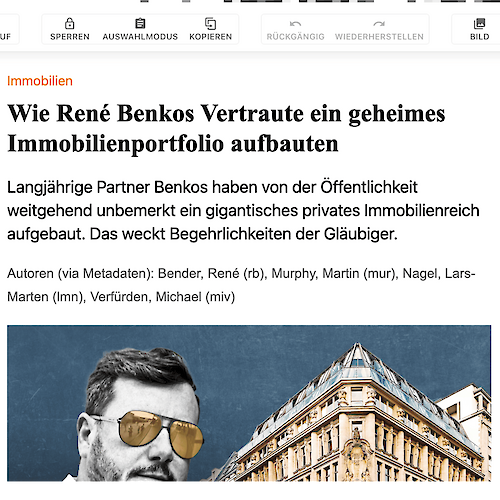
Project example: At the Handelsblatt Media Group, jambit integrated Livingdocs with existing publishing processes and systems.
Develop digital media products for the web, apps, and other channels
We develop and expand digital applications, front-ends, back-end services, and platform components for a variety of use cases. In doing so, we take into account content delivery, integration with existing systems, and requirements for performance and future development. Audience, access, and monetization features can also be part of such integration projects.
Collaboration between product management, editorial, marketing, and development can also be part of such projects. Upon request, we analyze where requirements and decisions get lost in the development process and how AI-supported methods can assist in the implementation of new media features.
For native apps, we rely on Swift/SwiftUI and Kotlin; for web front ends, we use React/Next.js and Angular, among others; and for video, we use players for live and VoD with HLS. We ensure accessibility in accordance with WCAG 2.1 AA and BITV 2.0 from the very beginning through audits, a catalog of measures, semantic HTML, and systematic testing with screen readers—for example, to meet the requirements of the Accessibility Enhancement Act (BFSG).
Project example: jambit developed cross-platform live TV features and backend components for RTL+.
Translate Audience First into activation and monetization
We advise media companies on how to align user needs, usage signals, and business objectives. Together with your teams, we evaluate approaches to audience activation, relevant content experiences, and the further development of digital revenue models. Based on these strategic decisions, we derive data, product, and integration requirements and implement appropriate features in digital applications.
Project example: For the F.A.Z., jambit developed machine learning models that support editorial decisions regarding paywall placement
Integrating AI into Editorial and Digital Processes
We evaluate AI use cases based on their benefits, the available data, and the requirements for result quality and control. We then develop or integrate appropriate features into existing applications—for example, for classifying, enriching, and processing content, or to support editorial decisions.
Effectively operate and further develop media platforms
Bei der Entwicklung berücksichtigen wir Skalierung, Security, Monitoring und Anforderungen an einen zuverlässigen und effizienten Betrieb. Je nach Auftrag begleiten wir auch Cloud-Migration, kontinuierliche Weiterentwicklung und Betriebsverantwortung. So bleiben neue Funktionen nicht auf einen ersten Release beschränkt.
Projektbeispiel: Bei FAZ.NET übernahm jambit im dokumentierten Projekt Cloud-Migration, Betriebsaufgaben und die Weiterentwicklung der Plattform.
Digital Vision Statements Along the Media Value Chain
Which digital solutions make sense depends on user needs, the business model, and the existing media landscape. Typical projects range from modernized publishing systems to user-oriented features and digital revenue models, all the way to customized media products and AI-powered workflows.
Modular Publishing Platforms for Editorial and Distribution
Existing editorial and content systems are being evolved into a more flexible publishing landscape. APIs and clearly defined components connect planning, content management, front ends, and distribution channels. This makes it possible to add new features without having to make deep changes to the entire system each time.
Embedding Audience Activation in Digital Media Products
Content and usage data help us understand which needs a media offering fulfills and how it is actually used. Building on this, we can develop user journeys, recommendations, personalization, and data-driven product experiments tailored to specific target audiences. It is crucial to use the “Audience First” principle to develop concrete product features that support user activation and retention.
Digital media apps and streaming services for various devices
Web and app offerings combine content, navigation, playback functions, and digital services into a consistent user experience. Custom front-end and back-end components enable the integration of various media formats and the continuous enhancement of features. The RTL+ project illustrates this type of application context. This includes video players for live and VoD content, smart TV front-ends, and features that remain stable even under heavy load during live events.
High-Performance Platforms for Continuous Media Operations
Digital media offerings must remain available and scalable even under heavy usage. Modern cloud and platform architectures, automated deployment, and appropriate operational processes provide the technical foundation for this. Depending on the project, this may involve modernizing existing infrastructure or expanding production platforms.
As a general rule, integration, security, and long-term maintainability should be taken into account from the very beginning in all digital roadmaps.
End-to-End Content Workflows with Targeted Automation
Content is created, edited, enriched, and published across multiple systems and channels. Integrations and appropriate AI capabilities can support recurring steps, reduce manual handoffs, and lighten the workload for editorial teams. Subject-matter expertise and quality remain integral parts of the processes.
Designing Monetization Models and Integrating Them into Media Products
Paid content, subscriptions, paywalls, and other digital revenue models require a combination of business models, user perspectives, and technical features. jambit provides support in analyzing these models and implementing them into existing content and product ecosystems. This includes, for example, data and integration solutions for access, permissions, and paywall functionality. The F.A.Z. project showcases a data-driven application in the field of digital monetization.
Greater flexibility for media products and content value creation
The value of digital media solutions is not limited to new features. What matters most is how they improve content production, digital offerings, the user experience, and operational efficiency.





Why Media Companies Partner with jambit
For more than 25 years, jambit has been developing custom software. Our work for media companies includes editorial and content management systems, digital user experiences, data applications, and the day-to-day operation of complex media platforms. Projects we’ve completed for the Handelsblatt Media Group, RTL+, and the F.A.Z. showcase different aspects of this expertise.
To achieve this, we combine a deep understanding of the media industry and consulting on user engagement and digital revenue models with custom software development, architecture, integration, and expertise in data, AI, and platforms. We take a holistic view of user needs, business goals, processes, and existing systems to develop solutions that seamlessly integrate into digital media products and everyday media operations.
As a technology-agnostic partner, we work—depending on the assignment—either on independent projects or in mixed teams with our clients’ editorial, product management, executive, and IT teams. In this way, we complement existing expertise and take responsibility for complex development, integration, and modernization projects.
What Sets jambit Apart:
Consulting on audience activation and digital revenue models, combined with software engineering
Experience with editorial, content, and media platforms, as well as digital user offerings
Custom software development and phased modernization instead of a blanket system replacement
Integration of media processes, architecture, data, AI, and engineering
Project experience with production-ready applications, complex integration, and operations
Flexible collaboration with subject matter, product, and development teams
Video streaming for live and VoD, as well as native apps for iOS, Android, and Smart TV
Accessible development in accordance with WCAG 2.1 AA and BITV 2.0
Certified to ISO 9001, ISO 27001, ISO 14001, and TISAX





Frequently Asked Questions About the Digital Transformation of Media Companies
How can existing editorial and content management systems be modernized?
Not every upgrade requires a complete system overhaul. jambit analyzes existing applications, interfaces, and processes and develops appropriate modernization or integration strategies. New components can be added to existing systems in a targeted manner, while core publishing functions continue to be used.
How can content be delivered more efficiently across multiple media channels?
It is crucial that content, metadata, and publication information be usable across systems. Appropriate interfaces and integrated workflows can reduce the need for manual transfers and make content available for various digital products and distribution channels.
How does jambit support Audience First and Audience Activation?
Audience First places user needs at the center of product and content development. jambit helps derive specific requirements for audience activation—such as user journeys, content recommendations, personalization, or data-driven product decisions. Depending on the project, we combine expert consulting with data integration and custom software development.
How can paywalls and subscription features be integrated into existing media platforms?
Access and subscription features must work in tandem with content management systems, user accounts, and digital products. jambit develops integration and backend solutions for this purpose in suitable projects. The F.A.Z. project also demonstrates how data-driven recommendations within the CMS can support editorial decisions regarding paywall placements.
Which AI applications make sense for media companies?
For example, the classification, indexing, and enrichment of content, or support for recurring editorial tasks. Before implementation, we assess data quality, the effort required for integration, the required quality of results, and the options for subject-matter control. The key factor is whether the feature improves a specific process and fits into existing applications.
How can media companies use AI to develop digital products more quickly?
AI can support teams in defining requirements, software development, and quality assurance. However, it is crucial that technical decisions made by editorial, product management, and marketing teams remain transparent throughout all stages of development. jambit helps identify suitable applications, evaluate existing development processes, and integrate AI effectively into the implementation of digital media products.
How can digital media platforms be operated reliably when they experience high traffic volumes?
To achieve this, architecture, performance, scalability, monitoring, and operational responsibility must be coordinated. jambit takes these requirements into account during development and, depending on the project, can also handle operations and further development. Public projects such as RTL+ and FAZ.NET demonstrate the diverse technical challenges in this field.
How does jambit ensure the accessibility of digital media offerings?
We incorporate accessibility into the design of web and native apps from the very beginning. This includes WCAG 2.1 audits with a list of recommended actions, semantic HTML, ARIA, and keyboard navigation; scaling using the system font in apps; as well as automated testing and testing with screen readers. In this way, we help media companies meet the requirements of BITV 2.0, EN 301 549, and the Accessibility Enhancement Act.
Let's tackle your media challenge together
Would you like to better engage your audience, further develop digital revenue streams, modernize a media platform, or integrate data and AI into your processes in a targeted way?
Let’s work together to identify the business challenge you’re trying to solve, assess your existing systems, and determine the most appropriate technical approach.

Robert Kowalski
Head of Division Media
